
Perth, Western Australia · Since 2001
EchoActive Plus reads UHF chips and active transponders from the one box — and nothing in it is locked. Your chips, your software, your data, no contracts. That is how we have always built timing systems.
A club, or new to this
Stopwatch, clipboard, someone shouting numbers. You do not need to know what RFID is, how wide a finish line has to be, or what any of it costs.
Upgrading from your own setup
A reader, a laptop, software you know inside out. It is cheaper and you know exactly how it works. What it cannot do is keep timing when the network drops.
You time for a living
You know what you need. What you want to know is whether moving is worth the disruption.
How it works
The athlete crosses, the box reads, and then the reads have to become results — which takes scoring software, ours or somebody else's. The hardware does not care whose, and that is the entire point of an open system.
Swipe the diagram sideways →
The hardware
Disposable UHF chips give you the price per entrant. Active transponders give you the precision and read rate. EchoActive Plus does both at once, so you stop choosing between them — and stop buying two systems.
UHF · passive chip
A printed chip with no battery, powered by the antenna as the entrant crosses. Cheap enough to go in the bib and never come back.
Disposable · from 20c · nothing comes back
Active · 2.4 GHz transponder
A battery-powered transponder that is woken by a 125 kHz loop under the mat and answers with its own timestamp, taken from the box's clock.
Reusable · $55 each · collected and used again
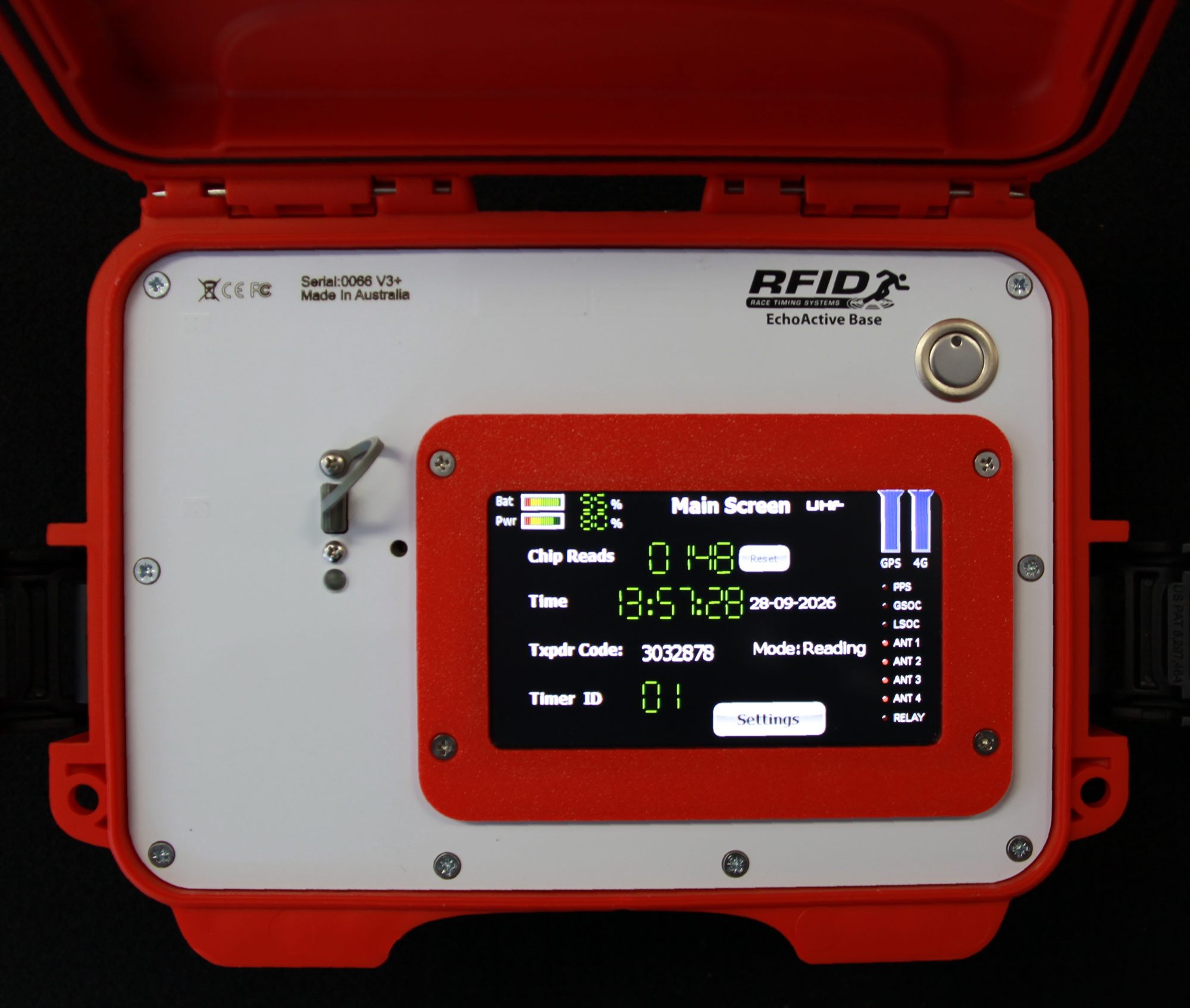
The current generation base unit. Four UHF antenna ports, GPS-disciplined clock, capacitive colour touchscreen, ethernet and an optional 4G modem, in a sealed case that has been to the polar circle and the Great Sandy Desert.
Figures from the published EchoActive technical sheet and Table 1 of the EchoActive Plus manual. UHF is region-set at the box: FCC, EU, Australia, China, Japan, Korea and 15 more.
The range
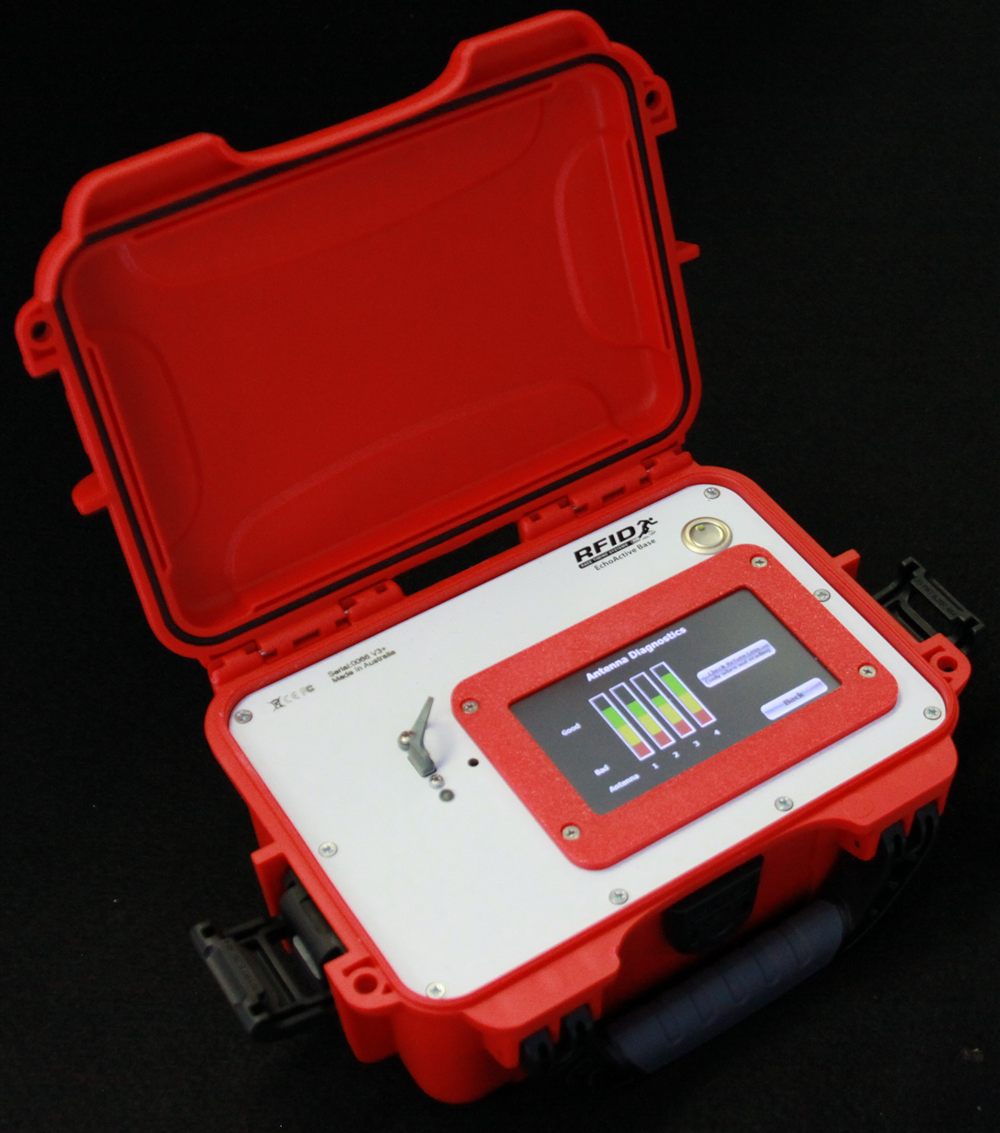
Base unit · reads both
The base unit. Four antenna ports, reading UHF chips and active transponders at the same time, with GPS, optional 4G and storage for 125,000 reads.
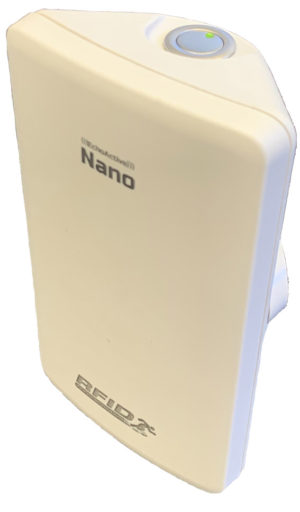
Second reader · active only
300 g reader for splits, laps and anywhere a full base unit does not need to go. Keeps time off GPS and the mobile network, 24 hours on a charge.
Reads active transponders only — not UHF chips. It is the answer to a split point, not to a second start line.
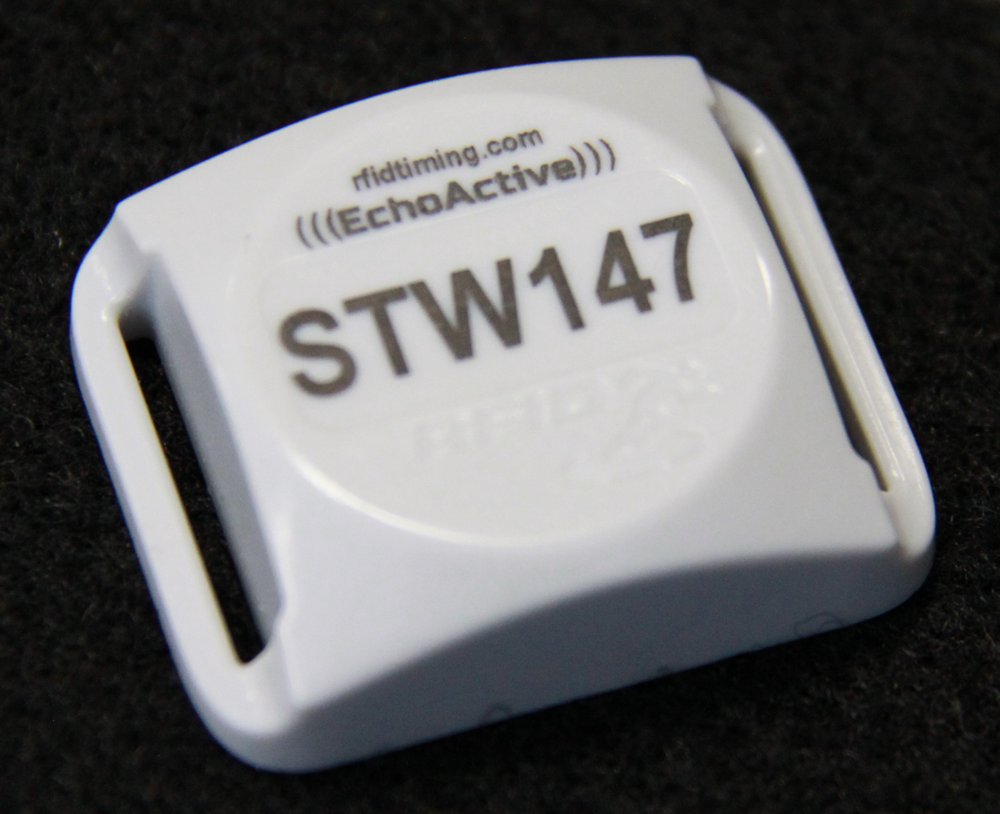
Active · worn by the athlete
Reusable active transponder, 15 g and waterproof to 10 m. Battery guaranteed six years, expected eight.
You collect these at the finish and use them again. Buy them once, not once per entrant.
Passive UHF · worn by the athlete
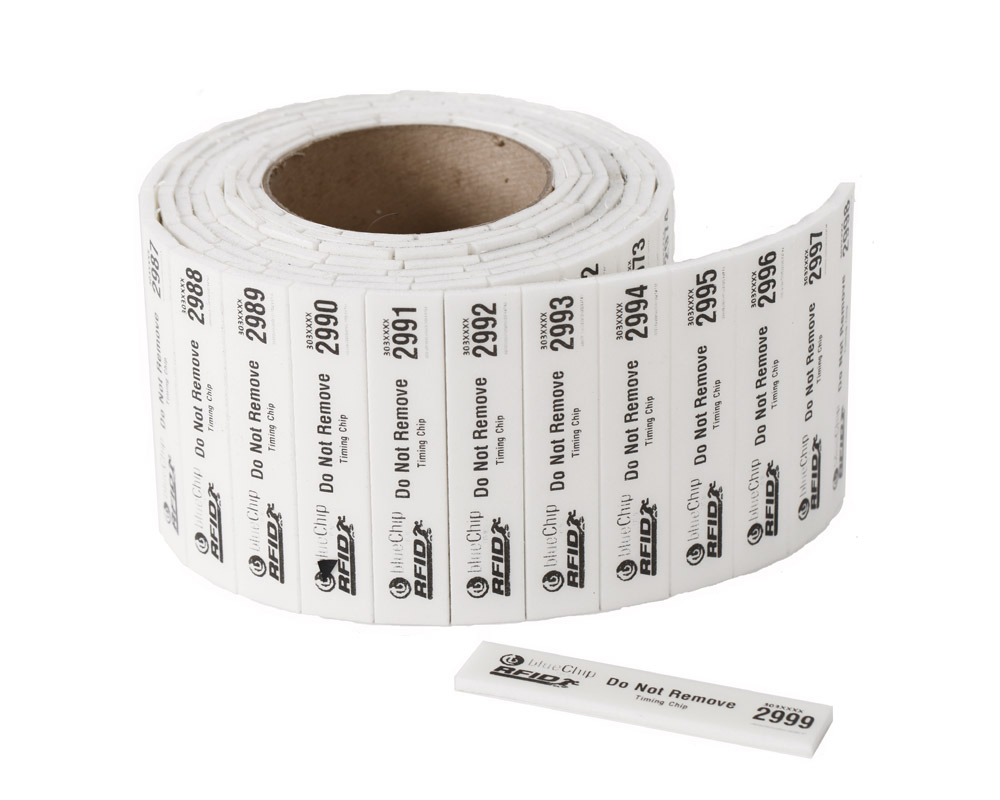
Chips start around 20c on the open market and we would rather you bought them there — any compliant chip reads on our boxes. If you would rather not handle the encoding, ours are 85c. Ankle and multisport tags, side antennas, LED race clocks and encoders are all in the shop.
Goes out on the bib and stays with the entrant. Nothing to collect, count or chase afterwards.
Which chip does my event want? →
*Excludes local taxes and duties. Add 10% GST for Australian customers. Prices are today's shop prices in Australian dollars. The same box without the UHF reader fitted is $3,300. †Open-market chips start around 20c for a plain inlay you encode and print yourself, and you are free to buy them from anybody. Ours are 85c: the chip on a 3 mm foam spacer that holds it clear of the athlete so the read is not lost, encoded to your race numbers and printed — 85c at any quantity up to 2,000 and 80c above it, with no minimum order.
New — cloud timing
Entries, waves, categories, live results and prize giving — running in the cloud while the event is still on the course. The box sends reads over 4G, Podium scores them, and the public results page updates itself.
Podium PC and Podium Mobile talk to the same event, so the timing truck and the marshal out on the split are looking at the same data.
Everything in the cloud. Entries, waves and categories, live public results, prize giving, Podium PC and Podium Mobile. Online entries are free to take; only a paying entrant carries $1, out of the payment.
The same, plus the local timing server — Podium itself running on a machine in the tent, scoring on the venue network with no internet at all, and syncing to the cloud when a link comes back. We set this one up with you rather than selling it off a page.
*Excludes local taxes and duties. Add 10% GST for Australian customers.
At the timing point
0 reads at the line
Public results, updating
Where it runs
From a 40-entrant club handicap to a 30,000 runner marathon. From the Polar Circle Marathon in Greenland to the Redback Enduro in the Great Sandy Desert.
Support
Manuals, firmware and answers are on the site, downloadable by anyone, whether you bought last week or in 2009. If you still need a person, you get one — usually the person who built the thing.
Setup guides and full manuals for every system we have shipped, current and retired.
Browse manuals →Latest releases and update instructions for base units, Nanos and transponders.
Get firmware →Straight answers on setup, antennas, chip encoding, Podium and race-day troubleshooting.
Open help →Worldwide
Designed, manufactured, tested and supported from one building in O'Connor, Western Australia. You deal with the people who built the thing — there is no reseller in the middle, and no support tier to climb.
Unit 1, 97 Garling St, O'Connor
Western Australia 6163
+61 8 9331 6562
info [at] rfidtiming.com
We ship worldwide, and have done since 2001. Our systems are in use on every continent — from the Polar Circle Marathon in Greenland to the Great Sandy Desert.
Manuals and firmware are open to anyone, no login. Beyond that it is a phone call or an email to the same building, in your timezone or ours.
How many entrants, what sport, how many timing points. We will tell you what you actually need — and what you do not.